
How One Copper Mine Built and Abandoned an Entire City: Kennecott Alaska
Kennecott, Alaska
61.500 N, 142.900 W
Kennecott, Alaska was not supposed to become a normal town. It existed because a copper deposit in the Wrangell Mountains was rich enough to justify building an entire industrial world around it. The mines were high above the valley. The mill town sat below them beside the Kennicott Glacier. A railroad, power plant, hospital, bunkhouses, offices, tramways, and processing buildings all appeared because one remote mountain held ore valuable enough to pull capital, machinery, and workers deep into Alaska.
From 1911 to 1938, Kennecott processed nearly $200 million worth of copper. Then the reason for the town's existence disappeared. When the high-grade ore was exhausted, the company closed the operation, the last train left, and the mill town became one of the most dramatic abandoned industrial sites in the United States.
The Mountain That Built A Town
The story began with copper showing in the mountains above what is now Wrangell-St. Elias National Park and Preserve. Prospectors and investors recognized that the ore was unusually rich, but finding copper was only the first problem. Kennecott was remote even by Alaskan standards. To profit from the deposit, the company had to solve transportation, housing, power, processing, and year-round logistics at the same time.
The result was a company town built for extraction. Ore came down from the mines by aerial tramway. The concentration mill sorted, crushed, separated, and prepared it for shipment. Workers lived in bunkhouses. Managers worked from company offices. A hospital, school, store, recreation hall, and support buildings turned the site into a functioning community, but every part of it was tied to the mine.
Kennecott was a city with a single purpose. It existed to move copper from a mountain to market.
The Mill Town Below The Mines
The fourteen-story concentration mill is the building that defines Kennecott today. It rises against the hillside in red timber, a vertical machine built to let gravity help move ore through each processing stage. Higher-grade material could be handled directly, while lower-grade ore passed through crushers, jigs, tables, flotation systems, and other equipment designed to recover as much copper as possible.
The mines themselves were several miles away, higher on the mountain. That separation shaped the whole operation. Kennecott was not just a mine entrance with a few cabins beside it. It was an integrated industrial system spread across glacier, ridge, tramway, railroad, and port.
The Copper River and Northwestern Railway made the system work. Ore from Kennecott traveled almost 200 rail miles to Cordova, where it could be shipped out. Without that rail connection, the copper would have remained trapped in the mountains.
A Company Town With An Expiration Date
Kennecott's success contained the terms of its collapse. The operation depended on exceptionally rich ore bodies. Once those were depleted, the town had no independent economic base large enough to survive.
By the 1920s, company geologists were already warning that the end was visible. Production continued, but the best ore was being used up. Mines closed one by one. In 1938, the remaining operations shut down. The last train left Kennecott that November.
What remained was a town built too specifically to become something else. The workforce left. Company functions stopped. Buildings that had been maintained because they served copper production were suddenly exposed to weather, snow load, and time.
Abandonment In Place
Kennecott did not become a ghost town because a disaster destroyed it. It became a ghost town because the math changed. The ore that justified the railroad, mill, housing, and machinery was gone.
That is what makes the site so revealing. Many abandoned places are fragments, but Kennecott still shows the structure of the whole operation. The mill, power plant, machine shop, employee housing, and support buildings remain legible as parts of one industrial organism. You can see how the company organized labor, movement, hierarchy, and technology around a single resource.
Today, the Kennecott Mines National Historic Landmark is managed within Wrangell-St. Elias National Park and Preserve. Preservation has stabilized key buildings while keeping the scale of the abandoned mill town visible against the glacier valley.
Why Kennecott Matters
Kennecott is one of the clearest examples of a resource city built around extraction and then left behind when extraction stopped. It was remote, expensive, technically complex, and extraordinarily profitable for a limited window of time.
The town's ruins show both sides of that bargain. Kennecott proves what a company could build when the ore was rich enough. Its abandonment shows how quickly that same world could lose its purpose once the resource was gone.
Previous
The Rise and Fall of America's Richest Gold Rush Town: Bodie, California
Bodie, California
Next
Why Nobody Wants to Visit Disney World Anymore
Walt Disney World Resort, Bay Lake, Florida
Related Stories
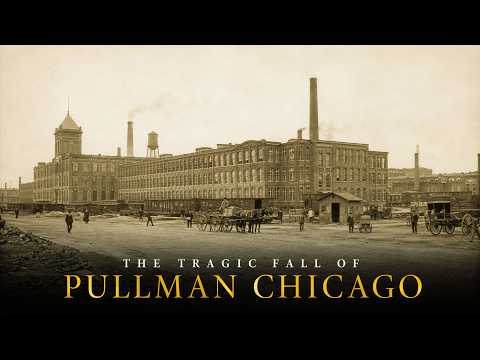
Chicago, Illinois
The Rise and Fall of America's Most Corrupt Company Town: Pullman, Chicago
George Pullman's model town offered workers modern homes while keeping every lease, wage, rule, and public space under company control, helping trigger the national Pullman Strike of 1894.

Chicago, Illinois
Sears Documentary: How the Richest Retailer in America Went Broke
Sears connected rural America through its catalog, built the world's tallest tower, and then dismantled its own retail system through decades of financial engineering and underinvestment.

Detroit, Michigan
Packard Plant: Detroit's Concrete Colossus
Detroit's most infamous ruin began as a pioneering Albert Kahn factory and ended as a three-and-a-half-million-square-foot monument to industrial collapse.