
The Neighborhood Buried Under Central Park: Seneca Village, New York Documentary
Central Park, Manhattan, New York
40.7874 N, 73.9696 W
Central Park is usually described as a public landscape created from rocky, undeveloped ground. That version removes the people who already lived there. Between roughly West 82nd and West 89th Streets stood Seneca Village, a community of homes, churches, gardens, and a school whose residents included many Black property owners.
New York acquired the land through eminent domain and cleared the settlement in 1857. For more than a century, the village survived mainly in scattered records and family memory while the park built over its roads and house lots.
Land Ownership Offered Political Power
In 1821, New York removed the property requirement for most white male voters while retaining a $250 property qualification for Black men. That discriminatory rule made land ownership unusually important to Black New Yorkers seeking a political voice.
In 1825, laborer Andrew Williams purchased three lots from John and Elizabeth Whitehead for $125. Epiphany Davis, a trustee of the African Methodist Episcopal Zion Church, bought twelve lots nearby. The church itself acquired property as the settlement grew.
The location was then well north of densely developed Manhattan. Its rocky terrain limited commercial value, which made small parcels obtainable for families priced out of neighborhoods farther south. Ownership offered space, stability, and—in some cases—the property value needed to vote.
A Village, Not a Squatter Camp
Seneca Village developed over three decades. Census and property records show a mixed community whose residents were predominantly Black, with Irish and possibly German immigrant households living nearby. By 1855, approximately 225 people occupied the area.
Residents worked as laborers, domestic employees, service workers, and skilled tradespeople. Property ownership was widespread relative to the city's Black population. Homes ranged from modest wooden structures to more substantial buildings, often with gardens and outbuildings.
Three churches served the settlement: African Methodist Episcopal Zion, African Union Methodist, and All Angels' Church, an integrated Episcopal congregation. A school and burial grounds reinforced the community's permanence. This was not an improvised camp on unused land. It was a taxpaying village with institutions built to last.
The Park Plan Selects Their Land
As Manhattan expanded, reformers and wealthy residents demanded a large landscaped park comparable to those in European capitals. Several locations were considered. Jones's Wood, a privately held tract along the East River, initially attracted serious support.
Powerful owners resisted the Jones's Wood proposal. In 1853, the state legislature instead authorized a central park extending from 59th to 106th Streets, later enlarged northward. The selected rectangle included Seneca Village and smaller settlements, farms, businesses, and institutions.
Newspapers supporting the project frequently described the inhabitants as squatters living in shanties. Property and census records contradict that stereotype. The language helped present removal as improvement while minimizing the rights of the people being removed.
Eminent Domain Turns Owners into Obstacles
The city used eminent domain to take the land. Commissioners assessed each parcel and offered compensation based on official valuations. Owners could challenge the figures, and many did, but the process favored the government defining both the public purpose and the price.
Andrew Williams sought substantially more for his property than the city offered. His final compensation did not reflect the value he placed on a home, community network, and long-term foothold in Manhattan. Tenants, who owned no real estate, had even fewer protections.
Residents fought through objections and legal claims, but the project moved forward. By October 1857, the houses, churches, and school had been removed. Families dispersed through New York and beyond. No complete record traces where each household went.
Central Park Erases the Street Grid
Frederick Law Olmsted and Calvert Vaux's park design reshaped the terrain. Roads, lawns, plantings, and later recreational facilities obscured the village's foundations. The area near today's West 85th Street became part of the park landscape, while the Great Lawn developed farther east from the former Croton Reservoir site.
Because little remained above ground, later histories often repeated the claim that the park had displaced only scattered squatters. Seneca Village disappeared not only physically but also from the accepted story of Central Park.
Researchers began reconstructing the community through deeds, tax records, church documents, maps, and census schedules. Their work established family names, occupations, property patterns, and the outlines of village life.
Archaeology Returns Everyday Lives
In 2011, the Institute for the Exploration of Seneca Village History conducted an archaeological excavation. Test sites uncovered foundation walls and thousands of artifacts, including ceramics, bottles, food remains, and household objects.
These finds did not reveal a hidden palace or dramatic ruin. Their importance came from ordinary life: a family choosing dishes, preparing food, maintaining a home, and participating in a community that official park history had treated as disposable.
The Central Park Conservancy created interpretive materials and an outdoor exhibit near the site. Plans for a permanent memorial have continued, while historians and genealogists have identified descendants connected to original residents.
Public Space and the Cost of Its Creation
Central Park became one of the world's most celebrated urban landscapes. Its public value does not require Seneca Village to remain absent from the story. The park was produced through a political choice about whose land could be taken and whose history could be simplified afterward.
Seneca Village gave Black New Yorkers property, institutions, and a degree of independence in a city that restricted all three. New York destroyed it precisely as that land became valuable for a different civic vision. The paths near West 85th Street now cross a neighborhood whose residents were not waiting for the city to improve their ground. They had already made a community there.
Previous
Before the Santa Monica Waterfront, There Was America's Wildest Pier: Pacific Ocean Park Documentary
Ocean Park, Santa Monica, California
Next
The Neighborhood Buried Under the Santa Monica Freeway: Sugar Hill Documentary
West Adams, Los Angeles, California
Related Stories
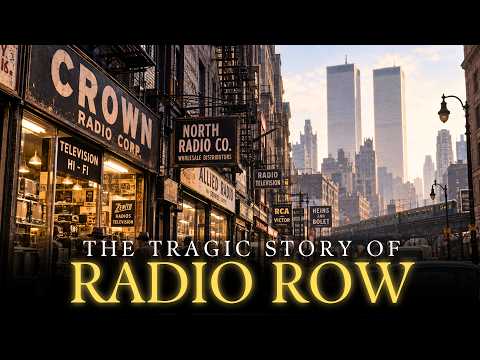
Lower Manhattan, New York
Why New York Hated The Twin Towers: Radio Row Documentary
Radio Row was America's dense marketplace for radios, televisions, surplus parts, and electronic invention. A deal to rescue a commuter railroad moved the World Trade Center directly onto its blocks.
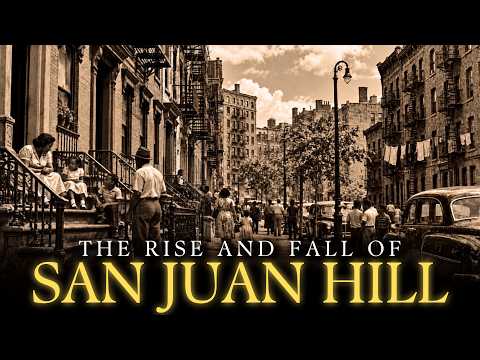
Lincoln Square, Manhattan, New York
This Famous Neighborhood Is Buried Under Lincoln Center: San Juan Hill Documentary
San Juan Hill nurtured Black music, Puerto Rican life, and generations of working families. A Robert Moses-led urban renewal project displaced thousands and delivered the cleared land to Lincoln Center.
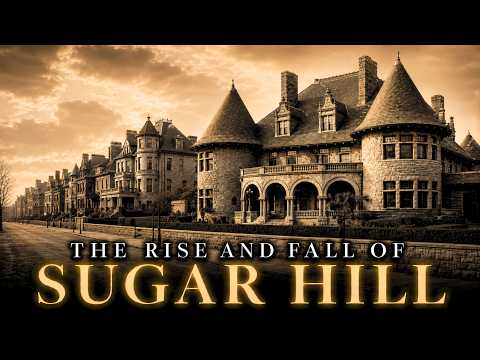
West Adams, Los Angeles, California
The Neighborhood Buried Under the Santa Monica Freeway: Sugar Hill Documentary
Black homeowners defeated the racial covenants aimed at removing them from Los Angeles' Sugar Hill. Less than twenty years later, the Santa Monica Freeway demolished the neighborhood's core.