
The Neighborhood LAX Bulldozed and Never Rebuilt: Surfridge, Los Angeles
LAX Dunes, Los Angeles, California
33.9366 N, 118.4354 W
At the western edge of Los Angeles International Airport, streets run behind a locked fence. They have curbs, intersections, faded lane markings, and names, but no houses and almost no traffic.
This was Surfridge, a beach neighborhood built on the dunes above the Pacific. The airport next door grew from a small field into an international hub. With the arrival of jet aircraft, noise and safety concerns turned desirable homes into property the city wanted to control.
Los Angeles bought or condemned all 822 houses, relocated more than 2,000 people, and removed every home. Plans for airport expansion and a golf course came and went. The streets remained.
What looks like vacant land is both a demolished neighborhood and, unexpectedly, one of the last large coastal dune habitats in Southern California.
A Neighborhood on the Dunes
Developers began selling property on the coast south of Playa del Rey in the 1920s. A naming contest produced Surfridge, combining the surf below with the ridge above it.
Advertisements promised ocean views, clean air, and distance from crowded Los Angeles. Lots were sold on installment plans, and building rules required substantial exteriors of brick, stone, or stucco. Custom houses spread across the dunes through the 1930s and after the Second World War.
The wider development was known as Palisades del Rey. Surfridge became an affluent enclave whose residents included actors, animators, filmmakers, and business leaders. Houses looked west toward the Pacific and east across open ground.
That open ground became Mines Field in 1928. At first, the small municipal airfield was more novelty than threat. Residents could watch air shows and the occasional aircraft from their homes.
The Airport Next Door Takes Over
Los Angeles purchased the airfield in 1937 and developed it into the city's primary airport after the Second World War. Commercial service expanded rapidly. New runways, terminals, roads, and navigation equipment pushed the airport toward Surfridge.
The first generation of passenger aircraft produced noise, but jets changed the scale. When Boeing 707s and Douglas DC-8s entered service at the end of the 1950s, takeoffs sent an intense roar across the neighborhood.
Conversation stopped when aircraft passed overhead. Windows rattled. Exhaust and the possibility of a crash became part of daily life. Houses that had been marketed for their quiet coastal setting now sat beneath one of the busiest departure paths in the country.
Airport expansion also required a safety and noise buffer west of the runways. In 1961, the city began acquiring Surfridge property.
The 822-Home Buyout
Residents faced a choice shaped by a single buyer. Some wanted relief from the noise. Others believed homes could be insulated or flight operations changed. As the city purchased more properties, the neighborhood became harder to sustain.
In a 1965 referendum, more than two-thirds of homeowners accepted a buyout. The remaining properties were condemned. Federal funds reimbursed much of the acquisition cost.
Between roughly 1965 and 1975, 822 houses were vacated. More than 2,000 residents relocated. Some buildings were moved; most were demolished.
The process happened house by house. Occupied blocks became rows of empty lots. Utilities were cut, structures vanished, and vegetation pushed into yards. Eventually every residence was gone, but the street grid, curbs, retaining walls, and scattered foundations remained.
The Expansion That Did Not Happen
Clearing Surfridge suggested that new runways or other airport facilities would soon occupy the land. Some proposals called for a golf course that would provide open space beneath the flight path.
Neither vision replaced the neighborhood. Aviation plans changed, costs grew, and environmental restrictions increased. The airport kept the land as a buffer while the abandoned infrastructure aged behind fences.
The absence created one of Los Angeles' strangest landscapes: hundreds of acres of immensely valuable coastal property, closed to development, crossed by roads built for residents who had been gone for decades.
From passing aircraft, the lines of the old subdivision remain visible. From Vista del Mar, palms and streetlights rise above the fence without houses around them.
A Butterfly Changes the Future
The dunes had been disturbed by streets, houses, military installations, and airport activity, but they still contained fragments of a rare ecosystem. In the 1970s, the El Segundo blue butterfly was documented there as the species approached extinction.
The tiny butterfly depends on coastal buckwheat. Development had eliminated most of its historic habitat along the Los Angeles coast. The former neighborhood offered space where native plants could return.
The Endangered Species Act and later recovery planning limited development of the dunes. Los Angeles World Airports began habitat restoration in the 1980s, removing invasive plants and supporting native species.
Today, the LAX Dunes cover about 307 acres. The habitat supports the largest remaining population of the El Segundo blue butterfly as well as hundreds of other plant and animal species. A 203-acre preserve lies within the wider dune landscape.
The neighborhood's destruction unintentionally protected land that conventional coastal development would almost certainly have consumed.
What Remains Behind the Fence
Surfridge is not open for casual exploration. The fenced land sits beside active runways and contains protected habitat. Limited restoration and educational events take place under the management of Los Angeles World Airports and conservation partners.
Inside, Rindge, Jacqueline, Kilgore, and other streets still divide blocks that no longer exist. Asphalt cracks under roots and weather. Curbs outline vanished lawns. Low walls and utility remnants reveal where houses faced the ocean.
Nature has not restored an untouched wilderness. It has grown through the infrastructure of a removed community. The result is neither ordinary ghost town nor ordinary reserve.
The Cost of Quiet
Buying Surfridge reduced the human impact of aircraft noise and created a safety buffer at LAX. It also solved an infrastructure conflict by eliminating the neighborhood rather than the source of the conflict.
Residents received payment, but compensation could not reproduce ocean views, shared history, or a community whose value collapsed as each neighbor left. The city acquired all 822 homes for a future it never built.
Surfridge now shelters a species that might otherwise have disappeared. That outcome matters, but it does not make the displacement inevitable or erase the lives once organized along the surviving streets.
Jets still climb over the dunes every few minutes. Below them, a butterfly preserve grows through a beach neighborhood Los Angeles bulldozed and never replaced.
Previous
The Dark Story of America's Forgotten Mass Deportation: The La Placita Raid
La Plaza de Los Angeles, California
Next
The Legendary Racetrack Buried Under SoFi Stadium: Hollywood Park, Los Angeles Documentary
Inglewood, California
Related Stories
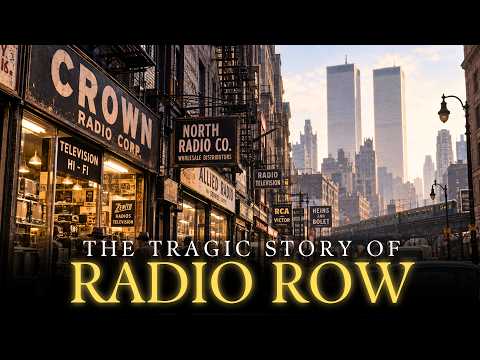
Lower Manhattan, New York
Why New York Hated The Twin Towers: Radio Row Documentary
Radio Row was America's dense marketplace for radios, televisions, surplus parts, and electronic invention. A deal to rescue a commuter railroad moved the World Trade Center directly onto its blocks.
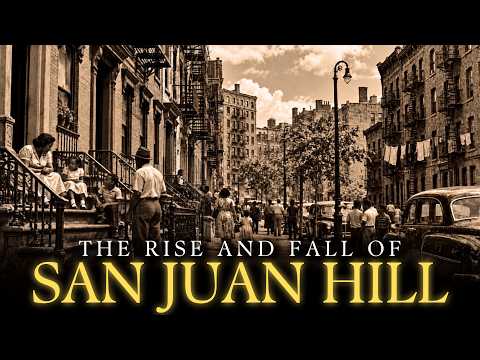
Lincoln Square, Manhattan, New York
This Famous Neighborhood Is Buried Under Lincoln Center: San Juan Hill Documentary
San Juan Hill nurtured Black music, Puerto Rican life, and generations of working families. A Robert Moses-led urban renewal project displaced thousands and delivered the cleared land to Lincoln Center.
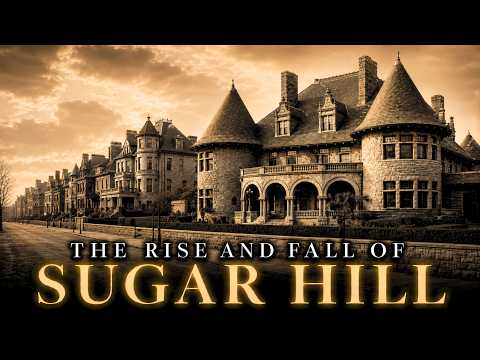
West Adams, Los Angeles, California
The Neighborhood Buried Under the Santa Monica Freeway: Sugar Hill Documentary
Black homeowners defeated the racial covenants aimed at removing them from Los Angeles' Sugar Hill. Less than twenty years later, the Santa Monica Freeway demolished the neighborhood's core.