
Sears Documentary: How the Richest Retailer in America Went Broke
Chicago, Illinois
41.8687 N, 87.7109 W
In 1973, Sears completed a 110-story headquarters above the Chicago Loop. The Sears Tower was the tallest building in the world, a monument to a retailer whose sales approached one percent of the entire American economy and whose credit card sat in roughly half of the nation's households.
Forty-five years later, Sears filed for bankruptcy. A chain that once operated more than 3,500 stores was reduced to a handful of locations, hundreds of empty mall anchors, and a tower carrying another company's name.
The usual explanation is that Amazon killed Sears. The timing tells a different story. Sears ended its catalog in 1993, one year before Amazon was founded, after decades of weakening the distribution system and customer relationships that should have made it the natural leader of online retail.
A Refused Box of Watches Started the Company
Richard Sears was working as a railway station agent in Minnesota in 1886 when a shipment of watches arrived for a local merchant who refused to accept it. Sears bought the watches and resold them to other station agents at a profit.
The opportunity was larger than watches. Rural Americans paid high prices at local general stores and had little access to the selection available in major cities. A mail-order company could use the expanding railroad and postal networks to put a national marketplace at every farm gate.
Sears partnered with watchmaker Alvah Roebuck and built a catalog that grew from jewelry into clothing, tools, appliances, farm equipment, musical instruments, and nearly every other object a household might need. The promise was simple: transparent prices, enormous choice, and satisfaction guaranteed.
Julius Rosenwald Built the Fulfillment Machine
Julius Rosenwald joined the company in the 1890s and transformed an improvised mail-order business into an industrial system. At the vast Sears complex on Homan Avenue in Chicago, orders moved through purpose-built warehouses designed to receive, sort, pack, and ship goods at extraordinary speed.
The catalog reached customers who had previously been isolated from national markets. Rural free delivery and parcel post strengthened the model, while Sears used its scale to pressure suppliers and keep prices below those of many local merchants.
The company eventually sold complete houses by mail. Sears Modern Homes arrived by rail as tens of thousands of numbered pieces with plans for assembly. Roughly 70,000 were sold, and many remain occupied in American neighborhoods today.
Rosenwald's influence extended beyond retail. His philanthropy helped build more than 5,000 schools for Black children across the segregated South, linking part of the fortune created by the catalog to one of the largest school-building programs in American history.
Sears Followed Americans Into the Suburbs
General Robert E. Wood understood that rising car ownership and changing census patterns were moving customers away from downtown shopping districts. Sears began building large stores where growing suburban families lived and where motorists could park.
The company paired broad selection with trusted service. Customers bought appliances, tools, clothing, insurance, and home repairs from the same institution. Sears stores became anchors for the shopping centers and malls that reorganized American retail after World War II.
Employees also shared in the company's success through a major profit-sharing program. For generations, a Sears job could provide stable wages, retirement savings, and a sense that workers had a stake in the business they operated.
By the early 1970s, the company had become so large that its Chicago offices no longer fit in the Homan Avenue complex or scattered downtown buildings. The Sears Tower represented the peak of a system that connected manufacturing, logistics, property, credit, and retail under one name.
The Company Chased Finance Instead of Fixing Retail
In the 1980s, Sears tried to become a financial-services conglomerate. It acquired Dean Witter and Coldwell Banker while already owning Allstate, producing a strategy critics summarized as "socks and stocks."
Management attention and capital moved toward finance while stores aged. Walmart built a faster supply chain and a clearer low-price identity. Specialty retailers offered deeper selection within individual categories. Sears still possessed enormous customer trust, real estate, and distribution capacity, but its retail operation became less competitive.
The company closed the catalog operation in 1993 after years of losses. That decision removed the part of Sears most similar to the internet businesses about to emerge: centralized ordering, national fulfillment, direct delivery, and shopping without visiting a store.
Sears later staged a partial comeback under Arthur Martinez, but the improvement did not rebuild the catalog infrastructure or solve the long-term problem of aging stores and inconsistent investment.
The Kmart Merger Turned Stores Into Financial Assets
Hedge-fund manager Eddie Lampert brought Kmart out of bankruptcy and combined it with Sears in 2005. The new Sears Holdings controlled valuable property and famous brands, but its stores needed extensive reinvestment.
Instead, the company spent heavily on share buybacks, divided business units into competing internal structures, sold brands and assets, and cut store expenses. Fewer employees worked in buildings receiving less maintenance while competitors improved both physical stores and online systems.
The creation of Seritage Growth Properties made the real-estate strategy explicit. Sears sold hundreds of properties to the new company and leased many back, converting owned stores into rent obligations. Lampert held major interests on both sides of the arrangement.
Store closures produced cash and reduced short-term losses, but each closure also removed another place where Sears could sell merchandise. The company was shrinking the network it needed to recover.
Bankruptcy Was the Result, Not the Turning Point
Sears Holdings filed for Chapter 11 bankruptcy protection in October 2018. By then, the company's decline had lasted decades. Online competition accelerated the damage, but it arrived after Sears had abandoned its catalog advantage, weakened its stores, sold assets, and treated retail operations as a source of value to extract rather than a system to renew.
What remains is spread across the country. Dead Sears anchors still define many failing malls. The Homan Avenue complex survives in new uses. The Sears Tower is now Willis Tower. Tens of thousands of catalog houses continue to shelter families who may not know their homes arrived by boxcar.
Sears did not fail because its original idea became obsolete. Ordering from home, comparing a vast inventory, and receiving goods through a national delivery network became the foundation of modern commerce. The company failed after it stopped investing in the machinery that had already built that future.
Previous
How One Industry Bankrupted an Entire Boardwalk City: Atlantic City, New Jersey
Atlantic City, New Jersey
Next
Why Nobody Lives in America's Newest Luxury Skyscrapers: Oceanwide Plaza Downtown LA
Los Angeles, California
Related Stories
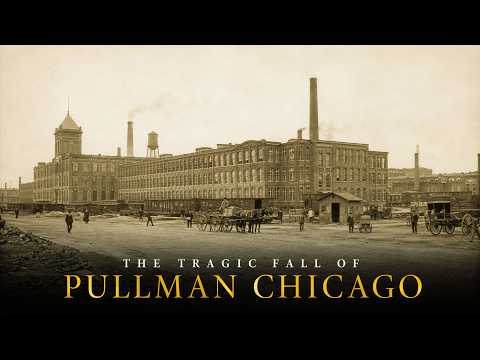
Chicago, Illinois
The Rise and Fall of America's Most Corrupt Company Town: Pullman, Chicago
George Pullman's model town offered workers modern homes while keeping every lease, wage, rule, and public space under company control, helping trigger the national Pullman Strike of 1894.
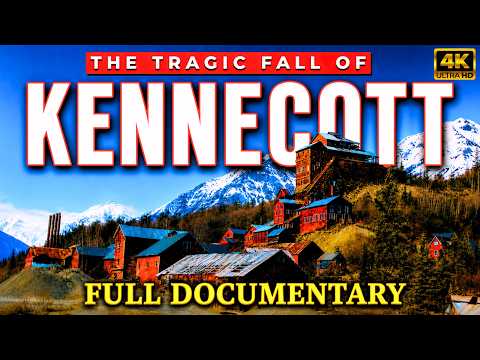
Kennecott, Alaska
How One Copper Mine Built and Abandoned an Entire City: Kennecott Alaska
Kennecott turned one of the richest copper discoveries in the world into a complete company town, then emptied almost overnight when the ore ran out.

Detroit, Michigan
Packard Plant: Detroit's Concrete Colossus
Detroit's most infamous ruin began as a pioneering Albert Kahn factory and ended as a three-and-a-half-million-square-foot monument to industrial collapse.